Let’s Talk About Fats!
Did you know that our bodies actually NEED fat?
Fat is an essential nutrient that supports brain function, cell health, hormone production, and the absorption of important vitamins.
At LIFEstrength, we like the saying: “It’s not just what you eat. It’s what you eat ate!”
This reminds us that the way our food is produced can influence its nutritional composition.
For example, butter from grass-fed cows can contain different amounts of certain fatty acids and nutrients compared with conventional butter. Grass-fed butter provides vitamin A and small amounts of vitamin K2.
Butter can be enjoyed as part of a balanced diet as well as olive oil, avocados, nuts, and seeds which provide unsaturated fats that are especially beneficial for heart health.
The goal is to understand the fats we’re eating and choose a variety of nutritious sources!
LIFEstrength TIP: We encourage choosing whole-food fats over highly processed alternatives. Also try adding a dollop of grass-fed butter to your morning coffee!
But Eating Fat Is Only Half the Story!
Our bodies must also be able to digest and absorb the fats we consume. That’s where an important substance called bile comes in!
Bile is produced by the liver and stored in the gallbladder. When we eat, bile enters the small intestine and helps break large fat droplets into smaller ones so digestive enzymes can do their work.
This process allows our bodies to absorb dietary fats and four essential fat-soluble vitamins:
- 👁️ Vitamin A: Vision, immune health, and healthy skin and mucous membranes.
- ☀️ Vitamin D: Bone health, calcium absorption, and immune function.
- 🛡️ Vitamin E: Helps protect cells from oxidative damage.
- 🦴 Vitamin K: Supports normal blood clotting and bone health.
Without adequate bile reaching the intestines, absorbing these nutrients can become more difficult.
So, What Does Poop Have to Do With It?
Our bowel movements can offer clues about what’s happening inside our digestive systems!
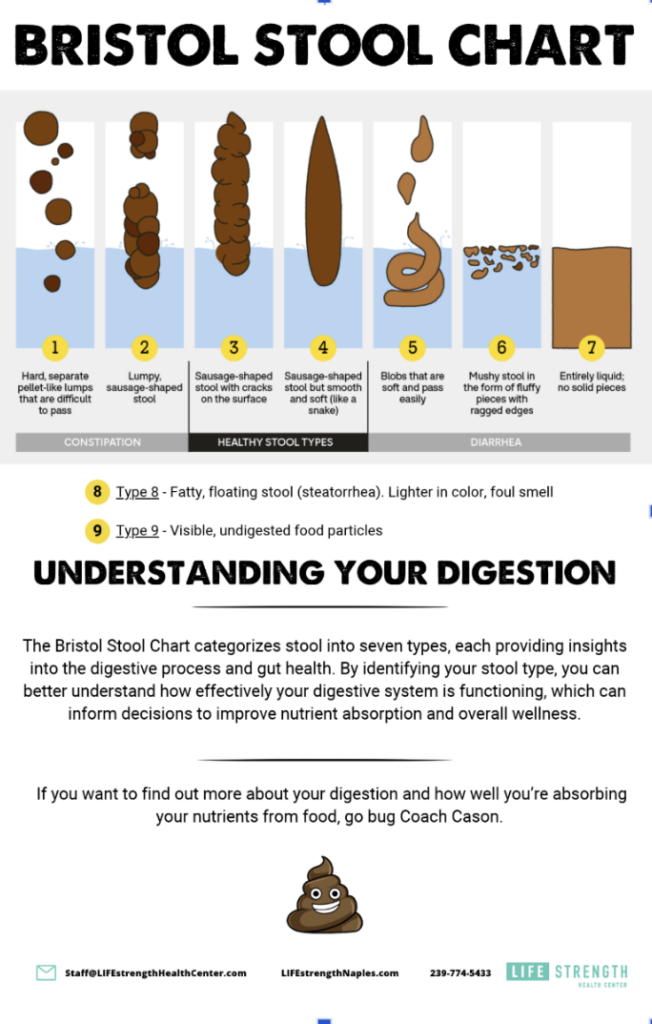
Stools that are repeatedly greasy, oily, unusually pale, or difficult to flush can sometimes indicate that fats aren’t being digested or absorbed properly.
A helpful resource is the Bristol Stool Chart, which illustrates different stool forms and can help families recognize changes in bowel habits.
Food for Thought
It’s not just about what goes IN our bodies, but how effectively our bodies digest and absorb the nutrients we consume!
This month, pay attention to the variety of fats in your family’s diet, learn about vitamins A, D, E, and K, and stay curious about your digestive health.
At LIFEstrength, we don’t chase symptoms. We investigate what’s causing them. If you’re struggling with digestion or nutrient absorption, schedule a Dig Day with our team. Let’s uncover what’s happening and determine where to steer the ship!
LIFEstrength Resource: What Your Bowel Movements Reveal About Your Health